
현대 재즈 프로젝트 Low Blue Driftin'의 음반별 서사 구조와 노랫말 분석
현대 도시인의 실존적 초상과 음악적 정체성
2026년 발표된 두 장의 EP — We Sway, Diminished — 와 싱글 "27" / "27 (1969–1994)" (2026년 9월 18일 발매)에 대한 분석 리뷰. 인용된 모든 가사는 아티스트 본인의 것이다.
프로젝트와 그 정체성
현대 대중음악 신에서 독창적인 예술적 영토를 개척하고 있는 Low Blue Driftin'은 베이스 중심의 묵직한 그루브, 자아 성찰적인 노랫말, 그리고 깊은 밤의 정적을 사색하는 독보적인 모던 재즈 프로젝트이다. 프로젝트명인 'Low Blue Driftin''은 그 자체로 음악이 지향하는 시각적·정서적 이정표이다. Low Blue는 심야의 차가우면서도 고요한 청색의 가라앉은 우울을 뜻하며, Driftin'은 불확실한 현대 사회에서 고유한 안식처를 발견하지 못한 채 끝없이 표류하며 내면을 응시하는 도시인들의 실존적 노마디즘을 나타낸다.
이들의 음악은 단순한 장르적 문법을 답습하는 데 그치지 않고, 악기의 음색과 언어의 배치가 긴밀하게 밀착된 '음향적 시(Soni-Poetry)'를 지향한다. 특히 베이스가 만드는 저음역대의 든든하고 어두운 공간 위에 얹히는 노랫말은 단순한 보컬 멜로디의 보조적 수단이 아니라, 사유의 무게를 청각적으로 증폭하는 문학적 텍스트로 기능한다.
2026년 발표된 두 장의 연작 EP, We Sway - EP(2026.04.10)와 Diminished - EP(2026.06.26)는 유기적인 대칭과 변증법적 구조를 이루며 창작자의 내밀한 회고와 도덕적 자아 성찰의 궤적을 고스란히 담아내고 있다. 여기에 3집 본편의 포문을 열기 전 발표될 브릿지 싱글 "27"과 그 변주인 "27 (1969–1994)"는 고립된 개인의 성찰을 역사적 연대와 안식의 영역으로 확장하는 결정적인 서사적 대전환을 선사한다.
We Sway EP: 수용의 탄성과 존재적 부유
첫 번째 음반인 We Sway - EP는 외부 세계의 거친 흔들림과 급변하는 시간의 왜곡 속에서 정서적 평정심을 잃지 않고, 삶의 흐름에 유연하게 몸을 맞추는 법을 배워가는 존재적 성장기이다.
We Sway
타이틀곡 "We Sway"는 세월이 가져다주는 극심한 정서적 시간의 비대칭성을 담담하게 서술하며 출발한다.
Three months feel like years gone by / Five years pass in just one night / Ten years back was yesterday / Was it ever easy, tell me now? / nah–nah, never really, anyhow
시간은 3달이 몇 년처럼 느껴지기도 하고, 5년이 하룻밤 사이에 흘러가기도 하는 등 우리를 혼란스럽게 표류시킨다. 그러나 화자는 삶이 결코 쉬운 적이 없었음을 담담히 인정할 뿐, 절망에 매몰되지 않는다. "Let it swing... once again", "let it bend"라는 중심 시어에서 볼 수 있듯, 꺾이지 않고 부러지지 않기 위해 적극적으로 흔들리기(Sway)를 선택한다. "나란히 걸어가지만 여전히 홀로(Side by side, still alone)" 걸어가는 외롭고 낯선 여정 속에서도 발은 지치고 영혼은 따뜻하게(Tired feet... but a warm soul) 온기를 간직하며, 춤추듯 삶을 흔들어 나가겠다는 의지가 유려한 영어 텍스트 속에 정초되어 있다.
Haru (하루)
한국어 가사를 차용하여 지극히 사적인 어조로 노래하는 "Haru (하루)"는 도시 생활의 피로와 매일 반복되는 단조로움 속에서 비로소 고개를 드는 심야의 낭만적 해방을 포착한다.
하루 하루 지쳐 버린 발걸음 뒤에 / 흩어지는 가로수의 낙엽소리는 / 희미해진 기억속의 너의 모습과 / 느릿하게 가라앉는 나의 숨소리
화자는 "어제와 닮아버린 오늘을 입고" 살아가지만, "밤공기가 부드러워지고 어깨가 먼저 흔들릴 때", 마감되었던 영혼의 움직임이 비로소 활성화된다. "아무 일도 없던 것처럼 잠깐을 살아가는 나의 하루" 속에서, 잊은 줄 알았던 이름 하나와 얼굴 하나가 다시 가까워진다. 그 얼굴이 누구의 것인지 곡은 끝내 말하지 않는다 — 어쩌면 밤길 어딘가에 두고 온, 오래전의 자기 자신일지도 모른다. 다만 그 얼굴을 향해 새어 나오는 미소는, 일상이라는 감옥 속에서도 나를 지탱해주는 내면의 불씨가 여전히 꺼지지 않았음을 보여준다. 이 불씨는 1집에서 처음 켜진다. 2집의 자기검열을 지나, 싱글 27에서 그것은 스물일곱 번째 일원이 되어 돌아온다.
Nuvens·Camino
이어지는 두 곡은 각각 포르투갈어와 스페인어로 이름 붙인 두 개의 작별이다. "Nuvens"는 언덕 위에서 구름을 보며 손가락 사이로 비어버리는 것들을 움켜쥐지 않는 법을 배우고 — 손 뻗어 닿을 것 같은데 / 손가락 사이로 비어버린 채 — "Camino"는 갈라진 길 위의 두 사람이 같은 온도로 빛나고 있음을 확인한다. 하나는 놓아주는 이별, 하나는 공명으로 남는 이별. 1집이 가르치는 흔들림의 기술은 이 두 곡에서 상실을 다루는 손의 기술이 된다.
Diminished EP: 실존적 자기 대면과 반성의 지도
두 번째 음반인 Diminished - EP는 1집의 비교적 평온하고 유연한 방랑으로부터 시점을 극적으로 전환하여, 자아의 심연을 직시하고 도덕적 자만심을 파괴하는 처절한 고백학(Confessionalism)을 정립한다.
창작자가 의도한 Diminished (질문) → Regina (내 주변) → Still Us (거울이 나에게로) → Inversion (나의 답 — 미완의 답)의 4단계 궤적은 그 어떤 대중음악 앨범에서도 보기 힘든 날카로운 내적 성장의 드라마를 선사한다.
1. Diminished — "질문: 세상의 요란함과 소외된 본질의 발견"
Diminished는 세상의 허영과 그에 반비례하는 고요한 진짜 가치 사이의 비대칭성을 파헤치며 앨범 전체의 서사적 기초를 지탱한다.
They never learned the names / of the ones who held the bottom / They passed them in the hall / and looked a little past them / While others made something / that had their name on it / quietly
'The Bottom'의 상징성과 소외. 이 곡에서 화자는 "가장 낮은 바닥을 지키는 이들(the ones who held the bottom)"의 이름조차 배우지 않고 그저 스쳐 지나가는 대중의 차가운 시선을 폭로한다. 이는 음악적으로 화성의 최저 음역대를 지탱하는 베이스의 성질이자, 보이지 않는 곳에서 성실하게 본질을 유지하는 고귀한 조력자들에 대한 메타포이다.
소음과 음악의 대비. 화자는 세상이 "타인의 아침 위에" 허술한 제국을 건설하고 "타인의 침묵으로" 공간을 차지한다고 고발한다. 겉만 번지르르한 그들의 화려한 요란함은 결국 먼지처럼 사라지지만(fades), 그들이 무시해버린 외로운 시간 속에서 조용히 만들어진 본질은 결코 사라지지 않는다(never goes).
"All motion, no direction." 이 구절은 쳇바퀴를 도는 주체들을 향한 날카로운 비수이다. 화자는 겨우 코드 하나(a chord)에 불과하면서 자신들이 거대한 교향곡(symphony)이라 착각하며 살아가는 껍데기들 속에서, 여전히 작고 감쇄된 채(still small, diminished)로 소외되어 있지만, "우리의 조용한 믿음이 가치 있었다"고 굳게 확신하며 고독을 끌어안는다.
2. Regina — "내 주변: 보이지 않는 고독한 영웅을 향한 헌사"
앞선 곡에서 세상의 소음과 본질의 차이를 발견한 화자는 고개를 들어 주변의 실존적 영웅인 'Regina'를 응시한다.
You set the tone before the noise / Then step outside and hold the room / That nobody knows you hold alone / You're wiser than you know / You're stronger than you feel
고독한 주체의 헌신. Regina는 Diminished에서 언급된 'the bottom을 지키는 존재'의 완벽한 구체화이다. 소음이 들이치기 전에 삶의 톤(tone)을 고요하게 정돈하며, 아무도 모르는 엄청난 삶의 무게를 지고 있으면서도 그것을 아무것도 아닌 것처럼 가볍게 다룬다.
고독에 던지는 연대와 위로. 밤길을 홀로 걸어가는 그녀의 무거운 어깨와 눈동자 속에 담긴 찰나의 흔들림을 보며 화자는 소리친다. "Look around, we're still here / You don't have to do this alone (둘러봐, 우리가 여전히 여기 있어. 혼자 하지 않아도 돼)." 이 곡은 단순히 멀리서 이상화된 존재를 숭배하는 영웅가가 아니라, 보이지 않는 곳에서 고독을 짊어진 세상의 모든 숭고한 버팀목들을 향한 가슴 찡한 연대의 찬가이다.
3. Still Us — "거울이 나에게로: 세상의 동화 압력에 대항하는 정체성의 보존"
주변의 신성한 존재들을 응시한 화자는 마침내 거울을 들어 자기 자신을 직시한다.
When I start sounding like the world / You just laugh and call me out / Say "that's not you" / Simple as that / And somehow bring the old me back
세상의 오염으로부터의 방어선. 세상은 끊임없이 타협과 가면을 요구한다. 화자가 거친 현실에 찌들어 결국 세상과 같은 소리(sounding like the world)를 내기 시작할 때, 상대방은 그저 다정하게 웃으며 "그건 너답지 않아" 한마디로 원래의 깨끗했던 자아(the old me)를 현실로 호출해 낸다.
가면을 벗기는 영혼의 닻. 사회적 생존을 위해 길들여진 가면(the mask I learned to wear)을 기꺼이 내려놓을 수 있는 관계, 서로 다른 길을 가고 다른 상처(different scars)를 안고 살아갈지라도 이름(name)만으로 온전한 서로를 부를 수 있는 유일한 존재가 있기에 화자는 영혼의 오염을 방어하고 "여전히 우리(Still us)"로 남을 수 있음을 고백한다.
4. Inversion — "나의 답: 도덕적 독선에 대한 파괴적 자기검열"
EP의 마침표이자 창작자가 고독한 탐색 끝에 내놓은 최종적인 '답'인 이 곡은, 앨범 전체의 문학적 수준을 비범한 경지로 끌어올리는 엄격한 자기검열의 전장이다.
Did I stop seeing the ones who held the bottom / or did I just start believing I never would? / I looked long enough / and every mirror started looking back
위선적 주체의 경계 해체. 테이블을 뒤엎어버린 혁명가나 방의 구조를 바꾼 기득권이나 결국 "같은 불길에 손만 조금 더 깨끗할 뿐(Same fire just cleaner hands)"인 가해자들이 아닐까 회의하던 화자는 마침내 질문의 칼날을 자기 목 끝에 들이댄다.
도덕적 자만에 가하는 충격. "나는 'Diminished'에서 비판했던 자들처럼, 어느새 '바닥을 지탱하는 이들'을 외면하고 지나치는 차가운 자만심을 지닌 방관자가 된 것은 아닐까? 아니면 나는 결코 그런 위선자가 되지 않을 거라고 교만하게 스스로를 믿고 있는 것은 아닌가?"
Inversion(전위)이 선사하는 구원. 거울 속에 투영된 내면의 추한 질문은 끝내 해소되지 않고 열려 있다. 화자는 여전히 자신이 어떤 인간인지 모른다고 고백한다. 그러나 하나의 완강한 실존적 명제를 붙잡으며 답을 대신한다. "적어도 나는, 스스로를 돌아보고 성찰하는 일을 멈춘 인간은 아니다 (I'm not the one who stopped looking)." 이 도망치지 않는 치열한 직시 자체가 바로 화자가 마침내 도달한 미완의 유일한 구원이다.
싱글 '27'과 '27 (1969–1994)': 고독의 교차로에서 피어난 침묵의 연대와 위령제
Diminished - EP의 종착지인 "Inversion"에서 던져진 처절한 자기검열은 화자를 깊은 성찰적 고독 속으로 밀어 넣었다. 그러나 정규 3집으로 향하는 가교가 될 싱글 "27"과 이의 변주인 "27 (1969–1994)"는 고해성사를 마친 주체가 방 밖으로 걸어 나와, 광막한 어둠 속에서 같은 흉터를 지닌 존재들과 만나는 기적 같은 구원과 안식의 연대기를 완성한다.
(나 홀로의 성찰) → (나와 같은 고뇌를 한 이들의 발견) → (내면의 불꽃을 품은 실존적 전진)
1. 갈림길(Crossing)과 침묵의 환대
A fire at the crossing / low, and counting them in / They come in off the road / the quiet they chose still on them / No one asks where they've been / The fire already knows
"27"의 공간적 배경은 목적지가 아닌 어두운 밤의 갈림길(crossing)이다. 이곳에 낮게 피어오른 모닥불(low fire)은 먼 길을 걸어온 방랑자들을 세어 들인다. 이들은 각자 고독한 주체로서 스스로 선택한 침묵(the quiet they chose)을 여전히 어깨에 두른 채 모여든다. 누구도 그들이 어디서 어떤 고통을 겪고 왔는지 묻지 않는다. 그 침묵의 무게를 모닥불과 서로의 존재가 이미 너무나도 잘 알고 있기 때문이다. 이는 억지스러운 증명이나 침해 없이도 성립하는 가장 성숙하고 고요한 수준의 조우를 뜻한다.
2. 고독의 습관과 깨어진 고립감
I sat down a little apart / the way you learn a long road at night / Then I raised my eyes — / the same tired on every face / turns out they walked it too, alone
화자는 밤길을 오래 걸으며 몸에 익은 방어적 본능에 따라, 다른 이들로부터 조금 떨어져 앉는다(sat down a little apart). 타인에 대한 경계 혹은 고독이 편해진 습관의 발현이다. 그러나 이내 고개를 들어 불빛 너머를 응시했을 때, 화자는 경악과도 같은 안도감을 마주한다. 모닥불가에 모인 모든 이들의 얼굴에 서린 피로(the same tired)는 자신이 평생 짊어지고 왔던 것과 정확히 같은 형태였기 때문이다. "결국 그들도 이 길을 지독하게 홀로 걸어왔던 것이다(turns out they walked it too, alone)." 나만 홀로 표류하고 있었던 것이 아니라는 이 자각은 1, 2집을 통하여 단 한 번도 주어지지 않았던 거대한 실존적 위로로 다가온다.
3. 해결되지 않은 화음(Unresolved Chord)의 음악적 구원
Nobody plays over anyone here / everybody leaving room / tonight we're holding one long chord / and nobody needs it resolved
이 대목은 이 프로젝트가 지향하는 재즈의 화성학적 철학이 가사 미학과 결합한 최고의 절정이다. 재즈 세션에서 연주자들은 서로의 소리를 덮어쓰지 않고 기꺼이 상대방을 위한 여백(room)을 남겨둔다. 모닥불가에 모인 이 단독자들 역시 서로의 상처를 침범하지 않고 그대로 둔 채, 오늘 밤 "하나의 긴 화음(one long chord)"을 함께 붙잡고 서 있다.
중요한 것은 이 화음이 "해결될 필요가 없다(nobody needs it resolved)"는 선언이다. 클래식이나 팝 음악에서 불협화음이나 긴장(Tension)은 반드시 해결(Resolution)되어야만 심리적 안정을 주지만, 이 고요한 밤의 연대 속에서는 불완전하고 긴장감 넘치는 상태 그대로를 함께 공유하는 것만으로도 완전한 평온에 도달한다. 삶의 결핍(Diminished)과 미완의 답(Inversion)을 억지로 꿰맞추어 해결하려 애쓰지 않고, 그 불안정한 화음 자체를 서로의 여백 속에서 기꺼이 껴안는 태도로의 성숙이다.
4. 상처의 경계선과 침묵의 조율
The fire only gives us half / half a face, the rest to the dark / what it doesn't show, I know is there — / I don't reach for it
모닥불은 이들의 얼굴을 오직 절반(half a face)만 비추어 줄 뿐, 나머지 절반은 어두운 밤의 심연에 남겨둔다. 화자는 어둠 속에 묻혀 보이지 않는 타인의 온전한 비밀과 사연을 억지로 들추어내려 손을 뻗지 않는다(I don't reach for it). 타인의 고통을 내 호기심으로 가공하지 않고, 그 어둠마저 온전히 존중하는 정직한 거리가 주는 편안함이다. 그렇기에 이 공간에서는 누구도 자신의 자리를 얻기 위해 상처를 증명하거나 애쓸 필요가 없다(No one asked me to earn my seat).
The ones who'd carried more than me, and longer — / the same quiet question in every face / the one I thought I carried alone / Then one looked back / and we let it stay unsaid
나보다 더 무겁고 긴 짐을 짊어지고 온 이들의 눈동자 속에서, 화자는 비로소 자신이 홀로 메고 있다고 생각했던 '그 조용한 실존적 질문(the same quiet question)'을 발견한다. 그리고 누군가와 눈이 마주쳤을 때, 그들은 그것을 구태여 말로 뱉어 정의하지 않고 침묵 속에 그대로 둔다(let it stay unsaid). 말이라는 거친 도구로 정의되는 순간 본질이 훼손됨을 아는 고결한 영혼들의 무언의 약속이다.
5. 버전의 분할: '26+1'의 연대와 '1969–1994' 위령제 (Requiem)
창작자는 싱글 27을 두 가지 정서적 질감으로 분할하여 릴리즈함으로써, 가사가 가진 문학적 다층성을 음악적으로 실현한다.
메인 버전 — 27 (Original). 화자가 밤의 교차로에서 만난 '나와 같은 고민을 하는 26명의 그들'과, 그들을 모이게 한 '1개의 본질적인 불꽃(Fire)'이 만나 이뤄지는 '26+1=27'의 연대와 위로의 서사를 담는다. 불은 장면의 조명이 아니라 그 자리의 스물일곱 번째 일원이다 — 다른 이들을 세어 들이는 자이자, 누구도 어디서 왔는지 물을 필요가 없는 이유.
슬로 버전 — 27 (1969–1994). 대중음악 역사상 가장 눈부시게 타오르다 27세의 나이로 홀로 소멸해 간 전설적인 아티스트들(27 Club)을 향한 은밀하고 고결한 오마주(Homage)이다. 27클럽의 역사적 시작점인 브라이언 존스의 서거(1969년)부터 현대적 클라이맥스인 커트 코베인의 서거(1994년)를 관통하는 이 부제는, 그 시절의 록(Rock) 음악을 사랑했던 창작자의 음악적 뿌리에 대한 경의이다.
평생을 세상의 속도 속에서 자신을 태우며 질주했던 그들에게, 이 '느린 템포의 변주'는 생전에 단 한 번도 허락되지 않았던 "스스로 선택한 침묵(the quiet they chose)"을 비로소 누릴 수 있게 해주는 가장 우아하고 고요한 음악적 진혼곡으로 작동한다.
인스트루멘털 — 27 (Instrumental). 세 번째 트랙은 가사를 걷어낸 버전이다 — 말해진 절반을 거두고, 말하지 않은 절반만 남긴 27. "the rest to the dark"가 트랙 하나가 된 셈이다.
6. 정답 대신 불꽃을 품고 가는 전진
I still don't know what I am / but I know I saw you / I still don't know what this was / but I know it mattered / wherever the road takes us / I'll carry the fire, not the answer / I saw you / and I'll carry this
싱글 "27"은 값싼 해피엔딩이나 명쾌한 해답을 주지 않는다. 화자는 여전히 내가 무엇인지 알지 못하고(I still don't know what I am), 이 기적 같은 만남이 정확히 무엇이었는지도 규정하지 못한다. 하지만 단 하나, 굳건한 존재론적 확신을 얻는다. "내가 당신을 보았다(I saw you)"는 실재적 사건과, "그것이 가치 있었다(it mattered)"는 뜨거운 감각이다.
앞으로 길이 우리를 어디로 데려가든, 화자는 정답(the answer)을 찾으려 헤매는 대신 이 밤에 함께 사른 '불꽃(the fire)'을 가슴속 깊이 품고 걷겠다고 다짐한다. 이 불꽃은 차가운 우주적 표류 속에서 자아를 태우지 않고 온기를 보존할 유일한 내적 엔진이자, 다가올 3집의 핵심 주제인 '쳇바퀴를 벗어나 딛는 1cm의 전진'을 가능케 할 거대한 추진력이다.
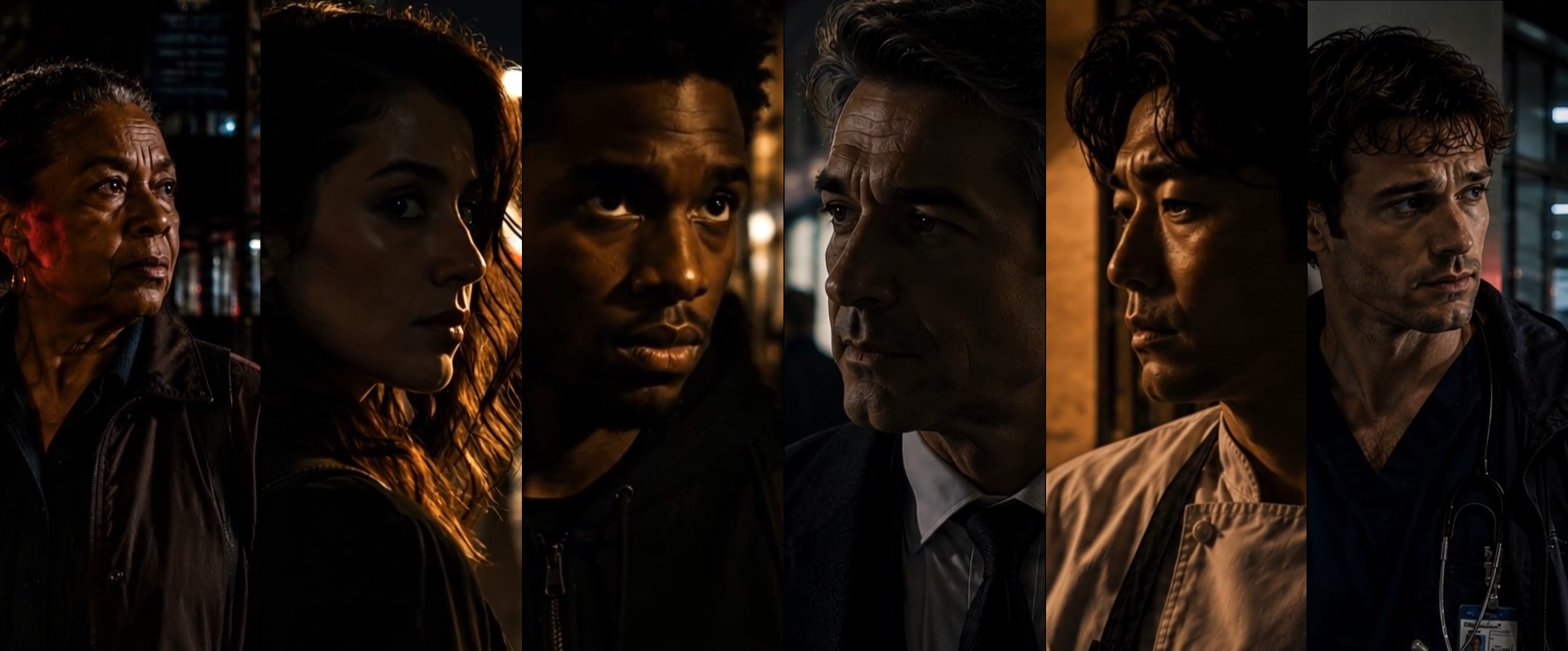
Twenty-six crossed the night. One looked back. One hand was real. → 27, 영상으로
결론: 쳇바퀴를 깨부수는 1cm의 전진을 위한 서막
Low Blue Driftin'의 가사가 도달한 종착지는 미학적 가라앉음(Low Blue)이나 낭만적 표류(Drifting)에 머물지 않는다.
We Sway - EP가 거친 운명의 바람 앞에서 유연하게 몸을 흔들며 부러지지 않는 법을 가르쳐주었고, Diminished - EP가 고독 속에서 스스로의 가식과 자만을 칼로 도려내는 뼈아픈 자기대면을 수행하게 했다면, 싱글 "27"과 "27 (1969–1994)"는 그 상처투성이 자아가 같은 아픔을 지닌 타인의 온기를 고요히 수용하고 가슴속 깊이 꺼지지 않을 진짜 불꽃을 묻는 '다짐의 의식'이다.
"All motion, no direction"이라는 무의미한 쳇바퀴의 무한 궤도에서 피 흘리던 화자는, 모닥불 앞에서 얻은 침묵의 연대와 내면화된 불꽃(27)을 원동력 삼아 기어이 자기만의 보폭인 '1cm의 전진'을 시작할 것이다. 그 1cm는 비록 세상의 화려한 교향곡에 비해 여전히 작고 보이지 않을지라도, 스스로의 의지로 쳇바퀴의 유리를 깨고 나온 세상에서 가장 고결한 영혼의 자취로 기억될 것이다.
The Narrative Architecture and Lyrics of Low Blue Driftin'
An Existential Portrait of the Modern Urban Soul
An analytical review of the project's 2026 discography — the EPs "We Sway" and "Diminished," and the single "27" / "27 (1969–1994)" (released September 18, 2026). All lyrics quoted are the artist's own.
The Project and Its Identity
Low Blue Driftin' occupies a territory of its own in contemporary music: a modern jazz project built on bass-forward grooves, introspective lyrics, and a sustained meditation on the stillness of late night. The name itself is a map of the music's coordinates. Low Blue names the cool, submerged melancholy of the small hours — blue not as sadness performed, but as temperature. Driftin' names the existential nomadism of the modern city-dweller: those who have found no fixed shelter in an uncertain world and keep moving, gaze turned inward.
What distinguishes the project is not genre fluency but the intimacy between sound and language — a kind of sonic poetry in which instrumental timbre and lyrical placement are inseparable. The bass builds a dark, load-bearing space in the low register, and the words set upon it function not as decoration for a vocal melody but as literary text: language that amplifies the weight of thought acoustically.
The two EPs released in 2026 — We Sway (April 10) and Diminished (June 26) — form an organic, dialectical pair, tracing an arc from private reminiscence to moral self-examination. The bridge single "27," together with its variant "27 (1969–1994)," now extends that arc decisively: from solitary reflection outward, into historical solidarity and rest.
We Sway EP: The Elasticity of Acceptance, the Drift of Being
The first EP is a record of learning — how to keep one's footing without rigidity, how to fit the body to life's current while the outer world shakes and time bends.
We Sway
The title track opens with a calm accounting of time's emotional asymmetry:
Three months feel like years gone by / Five years pass in just one night / Ten years back was yesterday / Was it ever easy, tell me now? / nah–nah, never really, anyhow
Time disorients us — three months stretch into years; five years vanish in a night. The speaker simply concedes that life was never easy, and refuses to sink into despair. The central verbs — let it swing... once again, let it bend — announce the song's chosen posture: to sway deliberately, so as not to snap. Walking a journey that is lonely even in company — Side by side, still alone — with tired feet... but a warm soul, the speaker resolves to move through life the way one moves through a dance: yielding, and therefore unbroken.
Haru (하루)
Sung in Korean and pitched at an intensely private register, "Haru" ("A Day") captures the small nocturnal liberation that surfaces only after the fatigue of urban routine:
하루 하루 지쳐 버린 발걸음 뒤에 / 흩어지는 가로수의 낙엽소리는 / 희미해진 기억속의 너의 모습과 / 느릿하게 가라앉는 나의 숨소리 (Behind footsteps worn down day after day / the scattering sound of leaves along the street / your face fading in memory / and my breath, slowly settling)
The speaker wears "a today that has come to resemble yesterday" — yet when the night air softens and the shoulders begin to move first, something long closed reopens. Within "a day lived briefly, as if nothing had happened," a name and a face thought forgotten draw near again. Whose face it is, the song never says — perhaps a younger self, left somewhere along the night road. But the smile that escapes toward it is quiet proof that the inner ember sustaining the self has not gone out, even inside the prison of routine. This ember is first lit here. It survives the second EP's self-interrogation and returns, in the single "27," as the twenty-seventh member at the fire.
Nuvens·Camino
The two songs that follow are two farewells, named in Portuguese and Spanish. "Nuvens" watches clouds from a hill and learns not to clutch what empties between the fingers — it seems close enough to touch / yet empties between my fingers — while "Camino" finds two people on divided roads still shining at the same temperature. One farewell lets go; the other stays as resonance. The art of swaying the first EP teaches becomes, in these two songs, the art of handling loss with an open hand.
Diminished EP: Self-Confrontation and the Map of Repentance
The second EP pivots sharply from the first record's supple wandering. Here the project stares into the depths of the self and establishes a confessional mode rare in popular music — a four-stage trajectory the artist has described as: Diminished (the question) → Regina (those beside me) → Still Us (the mirror turned toward me) → Inversion (my answer — unfinished). Few albums in any genre stage an inner drama this exacting.
1. Diminished — The Question: A Noisy World, and the Neglected Essential
They never learned the names / of the ones who held the bottom / They passed them in the hall / and looked a little past them / While others made something / that had their name on it / quietly
The symbolism of "the bottom." The song exposes the cold glance of a public that never learns the names of "the ones who held the bottom" — passing them in the hall, looking slightly past them. Musically, this is the nature of the bass itself: the instrument that holds the lowest register of the harmony, unseen. It is a metaphor for every unheralded laborer who maintains what is essential from a place no one watches.
Noise versus music. The speaker indicts a world that builds its flimsy empires "on other people's mornings" and claims its rooms "with someone else's silence." That glittering noise fades — it always fades. But what was made quietly, in the hours the noisy ones ignored, does not go. It never goes. They simply won't be there to see it.
"All motion, no direction." The phrase is a blade aimed at those who spin on the wheel: a single chord that mistook itself for a symphony. Amid these hollow figures the speaker remains small and diminished — pushed to the margins — yet holds fast to the conviction that what was believed quietly mattered, and embraces the solitude that conviction costs.
2. Regina — Those Beside Me: A Dedication to the Invisible Hero
You set the tone before the noise / Then step outside and hold the room / That nobody knows you hold alone / You're wiser than you know / You're stronger than you feel
The devotion of a solitary subject. Regina is the perfect embodiment of "the ones who held the bottom." She sets life's tone before the noise arrives; she carries a staggering weight that no one sees, and makes it look like nothing.
Solidarity offered to solitude. Watching her walk the quiet way home — the heavy shoulders, the flicker of doubt in her eyes — the speaker calls out: Look around, we're still here / You don't have to do this alone. This is not a hymn to an idealized figure admired from a distance. It is an aching anthem of solidarity for every unseen pillar holding up a corner of the world.
3. Still Us — The Mirror Turned Toward Me: Preserving Identity Against the Pressure to Conform
When I start sounding like the world / You just laugh and call me out / Say "that's not you" / Simple as that / And somehow bring the old me back
A defense against the world's contamination. The world demands compromise and masks without pause. When the speaker, worn down by it, begins to sound like the world, the other simply laughs and says: that's not you — and with that one phrase summons the original, uncorrupted self back into the room.
The anchor that removes the mask. Because there exists a relationship in which the mask one learned to wear can be set down — in which two people on different roads, carrying different scars, can call each other whole by name alone — the speaker's soul stays uncontaminated, and "still us" remains true.
4. Inversion — My Answer: A Demolition of Moral Self-Righteousness
Did I stop seeing the ones who held the bottom / or did I just start believing I never would? / I looked long enough / and every mirror started looking back
Dismantling the boundary of the righteous subject. The one who flipped the table and the one who merely changed the room may be, in the end, the same offender — same fire, just cleaner hands. Suspecting this, the speaker turns the blade of the question toward his own throat.
The shock delivered to moral pride. Have I become, without noticing, one of the very people "Diminished" diagnosed — a cold bystander who passes the ones holding the bottom? Or worse: have I arrogantly believed I never could become one? The second possibility is the more frightening form of self-deception.
The salvation of inversion. The ugly question reflected in the mirror is never resolved; it stays open. The speaker confesses he still does not know what kind of person he is. But he holds to one stubborn existential proposition in place of an answer: I'm not the one who stopped looking. This refusal to look away — this relentless, unflinching gaze — is itself the only, unfinished salvation the speaker reaches.
The Single "27" and "27 (1969–1994)": Silent Solidarity at the Crossroads, and a Requiem
The brutal self-interrogation of "Inversion" left the speaker in deep, reflective solitude. The bridge single "27" — with its variant "27 (1969–1994)" — completes what neither EP could grant: the confessant walks out of the room and, in the vast dark, meets others who bear the same scars.
(reflection alone) → (the discovery of others who carried the same question) → (existential motion, fire held within)
1. The Crossing, and a Hospitality Made of Silence
A fire at the crossing / low, and counting them in / They come in off the road / the quiet they chose still on them / No one asks where they've been / The fire already knows
The setting of "27" is not a destination but a crossing — a fork in a dark road. A low fire counts the wanderers in as they arrive. Each comes as a solitary subject, the silence they chose still draped across their shoulders. No one asks where they've been or what it cost. The fire — and each of them — already knows the weight of that silence. This is encounter at its most mature and most quiet: belonging that requires no proof and permits no intrusion.
2. The Habit of Solitude, and the Moment Isolation Breaks
I sat down a little apart / the way you learn a long road at night / Then I raised my eyes — / the same tired on every face / turns out they walked it too, alone
Following the defensive instinct that long night roads teach, the speaker sits down slightly apart. It is the reflex of someone for whom solitude has become comfortable. But when he lifts his eyes across the firelight, he meets a relief that borders on shock: the tiredness on every face is precisely the shape of the tiredness he has carried all his life. It turns out they, too, walked this road bitterly alone. I was not the only one drifting — a recognition that neither EP, across nine tracks, ever once granted. It arrives here as the discography's first great existential consolation.
3. The Unresolved Chord: Salvation in Harmonic Terms
Nobody plays over anyone here / everybody leaving room / tonight we're holding one long chord / and nobody needs it resolved
This passage is the summit at which the project's jazz philosophy and its lyrical aesthetics fuse. In a jazz session, players do not write over one another's sound; they leave room. The solitary figures at this fire do the same with one another's wounds — leaving them untouched, holding, together, one long chord through the night.
The crucial word is the last one: nobody needs it resolved. In classical and pop harmony, tension exists to be resolved; only resolution grants rest. But in this quiet solidarity, the incomplete, tension-laden state is shared exactly as it is — and that sharing alone reaches a complete peace. The lack named in Diminished and the unfinished answer of Inversion are not forced into resolution here. They are held, unresolved, inside one another's room. That is the maturity this song arrives at.
4. The Boundary of Wounds, and the Attunement of Silence
The fire only gives us half / half a face, the rest to the dark / what it doesn't show, I know is there — / I don't reach for it
The fire illuminates only half of each face, ceding the rest to the dark. The speaker does not reach into that dark to drag out another's full story. He knows it is there; he does not touch it. This is respect in its most honest form — refusing to process another's pain through one's own curiosity, honoring even the darkness. And it is precisely why, in this space, no one is asked to prove their wounds to deserve their place: No one asked me to earn my seat.
The ones who'd carried more than me, and longer — / the same quiet question in every face / the one I thought I carried alone / Then one looked back / and we let it stay unsaid
In the eyes of those who have carried more, and longer, the speaker finds the quiet question he believed was his alone. And when one of them looks back, they leave it unsaid — a wordless pact between souls who understand that the essential thing is damaged the moment it is defined by the blunt instrument of speech.
5. The Versions: "26+1," and a Requiem Spanning 1969–1994
The artist splits the single into two emotional textures, realizing the lyrics' layered meanings musically.
The original — "27." The wanderers who gather at the crossing, and the one essential fire that gathered them — twenty-six and one, meeting in a night of improbable solidarity. The fire is not the scene's lighting but its twenty-seventh member: the one who counts the others in, and the reason no one has to be asked where they've been.
The slower version — "27 (1969–1994)." A discreet, dignified homage to the legendary artists who burned most brightly in popular music history and vanished, each alone, at twenty-seven — the 27 Club. The subtitle spans from the death of Brian Jones in 1969, the club's historical beginning, to the death of Kurt Cobain in 1994, its modern culmination: an act of reverence toward the rock music of that era, and toward the artist's own musical roots.
And here the slower tempo becomes the homage's very content. To those who spent their lives burning at the world's speed, this unhurried variation offers what life never once allowed them: the chance, at last, to rest inside "the quiet they chose." The same song, its weight and pace laid down — a requiem sung not about them but for them, at the breath they were never given.
The instrumental — "27 (Instrumental)." A third track removes the words — the half that was spoken withdrawn, the half that was not left standing. The rest to the dark, as a track of its own.
6. Carrying the Fire, Not the Answer
I still don't know what I am / but I know I saw you / I still don't know what this was / but I know it mattered / wherever the road takes us / I'll carry the fire, not the answer / I saw you / and I'll carry this
"27" offers no cheap ending and no clean answer. The speaker still does not know what he is; he cannot even define what this meeting was. But he leaves with two unshakable certainties: the real event of I saw you, and the burning conviction that it mattered.
Wherever the road leads, the speaker will not wander in search of the answer. He will carry the fire — the warmth kindled this one night — as the sole inner engine that keeps a drifting self from burning itself for fuel. It is this fire that will power the third album's central motion: the one-centimeter step off the wheel.
Twenty-six crossed the night. One looked back. One hand was real. → 27, the film
Conclusion: Prelude to the One-Centimeter Step
The destination of Low Blue Driftin's lyrics is neither aesthetic submersion (Low Blue) nor romantic drift (Driftin').
We Sway taught the body to bend before rough winds without breaking. Diminished performed the painful surgery of cutting one's own pretense and pride away in solitude. And "27" — with "27 (1969–1994)" — is a rite of resolve: the wounded self quietly receiving the warmth of others who carry the same wounds, and burying an unextinguishable fire deep in the chest.
The speaker who once bled on the meaningless orbit of all motion, no direction will now — powered by a night of silent solidarity and an internalized fire — begin a stride entirely his own: one centimeter forward. Small, and invisible beside the world's gaudy symphonies. But taken by his own will, out through the glass of the wheel — and for that reason, among the most dignified traces a soul can leave.
La arquitectura narrativa y las letras de Low Blue Driftin'
Un retrato existencial del alma urbana contemporánea
Reseña analítica de la discografía de 2026 del proyecto — los EP «We Sway» y «Diminished», y el sencillo «27» / «27 (1969–1994)» (publicado el 18 de septiembre de 2026). Todas las letras citadas pertenecen al propio artista.
El proyecto y su identidad
Low Blue Driftin' ocupa un territorio propio dentro de la música contemporánea: un proyecto de jazz moderno construido sobre grooves con el bajo al frente, letras introspectivas y una meditación sostenida sobre la quietud de la madrugada. El nombre mismo funciona como mapa de sus coordenadas. Low Blue nombra esa melancolía fría y sumergida de las horas pequeñas — el azul entendido no como tristeza representada, sino como temperatura. Driftin' nombra el nomadismo existencial del habitante urbano: quien no ha encontrado refugio fijo en un mundo incierto y sigue andando, con la mirada vuelta hacia dentro.
Lo que distingue al proyecto no es su solvencia genérica, sino la intimidad entre sonido y lenguaje — una suerte de poesía sonora donde el timbre instrumental y la disposición de la letra resultan inseparables. El bajo levanta un espacio oscuro y portante en el registro grave, y las palabras que se apoyan sobre él no funcionan como adorno de una melodía vocal, sino como texto literario: lenguaje que amplifica acústicamente el peso del pensamiento.
Los dos EP publicados en 2026 — We Sway (10 de abril) y Diminished (26 de junio) — forman un par orgánico y dialéctico que traza un arco desde la reminiscencia privada hasta el examen moral de uno mismo. El sencillo puente «27», junto con su variante «27 (1969–1994)», extiende ahora ese arco de manera decisiva: desde la reflexión solitaria hacia afuera, hacia la solidaridad histórica y el descanso.
We Sway EP: la elasticidad de la aceptación, la deriva del ser
El primer EP es un registro de aprendizaje: cómo mantenerse en pie sin rigidez, cómo acomodar el cuerpo a la corriente de la vida mientras el mundo exterior se sacude y el tiempo se dobla.
We Sway
Three months feel like years gone by / Five years pass in just one night / Ten years back was yesterday / Was it ever easy, tell me now? / nah–nah, never really, anyhow
El tiempo nos desorienta: tres meses se estiran en años, cinco años se desvanecen en una noche. El narrador se limita a admitir que la vida nunca fue fácil, y se niega a hundirse en la desesperación. Los verbos centrales — let it swing... once again, let it bend — anuncian la postura elegida: mecerse deliberadamente para no quebrarse. Recorriendo un trayecto que es solitario incluso acompañado — Side by side, still alone — con tired feet... but a warm soul, el narrador decide atravesar la vida como se atraviesa un baile: cediendo, y por eso mismo entero.
Haru (하루)
하루 하루 지쳐 버린 발걸음 뒤에 / 흩어지는 가로수의 낙엽소리는 / 희미해진 기억속의 너의 모습과 / 느릿하게 가라앉는 나의 숨소리 (Tras unos pasos gastados día tras día / el sonido de las hojas dispersándose junto a la avenida / tu rostro desdibujándose en la memoria / y mi respiración, que se posa despacio)
El narrador viste «un hoy que ha terminado por parecerse a ayer»; y sin embargo, cuando el aire de la noche se ablanda y los hombros empiezan a moverse primero, algo largamente cerrado vuelve a abrirse. Dentro de «un día vivido apenas, como si nada hubiera ocurrido», un nombre y un rostro que se creían olvidados se acercan otra vez. De quién es ese rostro, la canción nunca lo dice — acaso un yo más joven, dejado en algún punto del camino nocturno. Pero la sonrisa que se escapa hacia él es prueba callada de que la brasa interior que sostiene al yo no se ha apagado, ni siquiera dentro de la cárcel de lo cotidiano. Esta brasa se enciende aquí por primera vez. Sobrevive al examen de conciencia del segundo EP y vuelve, en «27», como el vigésimo séptimo miembro junto al fuego.
Nuvens·Camino
Las dos canciones que siguen son dos despedidas, nombradas en portugués y en español. «Nuvens» mira las nubes desde una colina y aprende a no aferrarse a lo que se vacía entre los dedos — parece que podría tocarlo con la mano / y sin embargo se vacía entre mis dedos — mientras que «Camino» encuentra a dos personas en caminos separados que siguen brillando a la misma temperatura. Una despedida suelta; la otra permanece como resonancia. El arte de mecerse que enseña el primer EP se vuelve, en estas dos canciones, el arte de sostener la pérdida con la mano abierta.
Diminished EP: autoconfrontación y mapa del arrepentimiento
El segundo EP gira bruscamente respecto de la deriva flexible del primero. Una trayectoria de cuatro etapas: Diminished (la pregunta) → Regina (quienes están a mi lado) → Still Us (el espejo vuelto hacia mí) → Inversion (mi respuesta — inconclusa).
1. Diminished — La pregunta
They never learned the names / of the ones who held the bottom / They passed them in the hall / and looked a little past them / While others made something / that had their name on it / quietly
El simbolismo de «the bottom». Musicalmente, esta es la naturaleza misma del bajo: el instrumento que sostiene el registro más grave de la armonía, sin ser visto. Es una metáfora de todo trabajador sin honores que mantiene lo esencial desde un lugar que nadie observa. «All motion, no direction» — la frase es una hoja dirigida a quienes giran en la rueda: un solo acorde que se creyó sinfonía.
2. Regina — Quienes están a mi lado
You set the tone before the noise / Then step outside and hold the room / That nobody knows you hold alone / You're wiser than you know / You're stronger than you feel
Regina es la encarnación perfecta de «los que sostenían el fondo». Al verla volver a casa por el camino tranquilo, el narrador la llama: Look around, we're still here / You don't have to do this alone.
3. Still Us — El espejo vuelto hacia mí
When I start sounding like the world / You just laugh and call me out / Say "that's not you" / Simple as that / And somehow bring the old me back
Cuando el narrador, desgastado, empieza a sonar como el mundo, la otra persona simplemente se ríe y dice: that's not you — y con esa sola frase devuelve al yo original. Porque existe un vínculo en el que la máscara aprendida puede dejarse en el suelo, el «still us» sigue siendo verdad.
4. Inversion — Mi respuesta
Did I stop seeing the ones who held the bottom / or did I just start believing I never would? / I looked long enough / and every mirror started looking back
El narrador vuelve el filo de la pregunta hacia su propia garganta. La pregunta fea reflejada en el espejo nunca se resuelve; queda abierta. Pero se aferra a una proposición obstinada: I'm not the one who stopped looking.
«27» y «27 (1969–1994)»: solidaridad callada y un réquiem
(la reflexión a solas) → (el hallazgo de otros que cargaban la misma pregunta) → (movimiento existencial, con el fuego adentro)
1. El cruce, y una hospitalidad hecha de silencio
A fire at the crossing / low, and counting them in / They come in off the road / the quiet they chose still on them / No one asks where they've been / The fire already knows
El escenario de «27» no es un destino, sino un cruce. Un fuego bajo va contando a los caminantes a medida que llegan, cada uno con el silencio que eligió todavía sobre los hombros. Nadie pregunta dónde estuvieron. Esta es la pertenencia en su forma más madura: la que no exige pruebas y no permite intrusiones.
2. El hábito de la soledad, y el instante en que el aislamiento se rompe
I sat down a little apart / the way you learn a long road at night / Then I raised my eyes — / the same tired on every face / turns out they walked it too, alone
Al levantar los ojos por encima de la lumbre, el narrador se topa con un alivio que roza el sobresalto: el cansancio en cada rostro tiene exactamente la forma del que él ha cargado toda la vida. No era yo el único a la deriva — el primer gran consuelo existencial de la discografía.
3. El acorde no resuelto
Nobody plays over anyone here / everybody leaving room / tonight we're holding one long chord / and nobody needs it resolved
La palabra decisiva es la última: nobody needs it resolved. En esta solidaridad callada, el estado incompleto y tenso se comparte exactamente tal como es — y ese acto de compartir, por sí solo, alcanza una paz completa.
4. El límite de las heridas
The fire only gives us half / half a face, the rest to the dark / what it doesn't show, I know is there — / I don't reach for it
El narrador no mete la mano en esa oscuridad para arrancar la historia completa del otro. Sabe que está ahí; no la toca. No one asked me to earn my seat.
5. Las versiones
La versión original — «27». Veintiséis caminantes y un fuego esencial — el fuego es el vigésimo séptimo miembro, quien los cuenta al entrar.
La versión lenta — «27 (1969–1994)». Un homenaje a los artistas legendarios del Club de los 27. Brian Jones (1969) hasta Kurt Cobain (1994). El tempo más lento ofrece lo que la vida no les concedió: descansar dentro de «the quiet they chose».
La instrumental — «27 (Instrumental)». Una tercera pista retira las palabras: se recoge la mitad dicha y queda en pie solo la mitad que no se dijo. The rest to the dark, convertido en pista propia.
6. Llevar el fuego, no la respuesta
I still don't know what I am / but I know I saw you / I still don't know what this was / but I know it mattered / wherever the road takes us / I'll carry the fire, not the answer / I saw you / and I'll carry this
El narrador se marcha con dos certezas: I saw you y it mattered. Llevará el fuego como el único motor interior que impide que un yo a la deriva se queme a sí mismo como combustible.
Twenty-six crossed the night. One looked back. One hand was real. → 27, la película
Conclusión: preludio del paso de un centímetro
We Sway enseñó al cuerpo a doblarse sin romperse. Diminished practicó la cirugía dolorosa de extirpar el propio orgullo. Y «27» es un rito de determinación: el yo herido recibiendo el calor de otros que cargan las mismas heridas. Un centímetro hacia adelante — dado por voluntad propia, y por eso mismo, una de las huellas más dignas que un alma puede dejar.
Low Blue Driftin' のナラティブ構造と詩的テキスト
現代都市人の実存的肖像
2026年リリースの2枚のEP——「We Sway」「Diminished」——およびシングル「27」/「27 (1969–1994)」(2026年9月18日リリース)の分析レビュー。引用した歌詞はすべてアーティスト自身のものである。
プロジェクトとそのアイデンティティ
Low Blue Driftin'は現代音楽の中で独自の領域を切り開くモダン・ジャズ・プロジェクトだ。ベースを前面に押し出したグルーヴ、内省的な詩的テキスト、そして深夜の静寂への持続的な瞑想を軸に据える。プロジェクト名そのものが音楽の座標を示す地図である。Low Blue——それは夜明け前の冷たく沈んだ憂鬱を指す。演じられた悲しみではなく、温度としての青。Driftin'——それは不確かな世界の中で居場所を見つけられず、内へと目を向けたまま漂い続ける都市生活者の実存的な遊牧主義だ。
このプロジェクトを際立たせるのはジャンル的な流暢さではなく、音と言語の親密さだ——楽器の音色と歌詞の配置が切り離せないほど結びついた、ある種の音響的詩。ベースは低音域に暗く、重力を帯びた空間を構築し、その上に置かれた言葉はメロディーの装飾としてではなく、文学的テキストとして機能する。
2026年にリリースされた2枚のEP——We Sway(4月10日)とDiminished(6月26日)——は有機的で弁証法的な対をなし、私的な回想から道徳的な自己省察へと向かう弧を描く。ブリッジ・シングル「27」とその変奏版「27 (1969–1994)」は、その弧を孤独な内省から歴史的な連帯と安らぎへと決定的に延ばす。
We Sway EP: 受容の弾力性と存在の漂流
1枚目のEPは学びの記録だ——硬直せず踏みとどまる方法、外の世界が揺れ、時間が曲がる中で、身体を人生の流れに沿わせていく方法。
We Sway
Three months feel like years gone by / Five years pass in just one night / Ten years back was yesterday / Was it ever easy, tell me now? / nah–nah, never really, anyhow
時間は人を惑わせる——三ヶ月が何年にも感じられ、五年が一夜で消える。語り手は人生が楽だったことなどないと静かに認め、絶望に沈むことを拒む。中心的な動詞——let it swing... once again、let it bend——は曲の選んだ姿勢を告げる。折れないために、意図的に揺れること。Side by side, still alone、tired feet... but a warm soul — 委ねることで、折れずにいる。
Haru (하루)
하루 하루 지쳐 버린 발걸음 뒤에 / 흩어지는 가로수의 낙엽소리는 / 희미해진 기억속의 너의 모습과 / 느릿하게 가라앉는 나의 숨소리 (日々すり減っていく足取りの後ろに / 散り際の街路樹の葉音 / 薄れゆく記憶の中のあなたの面影 / ゆっくりと沈んでいく私の息)
話者は「昨日に似てしまった今日を着て」生きている。けれど「夜気が柔らかくなり、肩が先に揺れはじめるとき」、閉ざされていた魂の動きがようやく目を覚ます。「何事もなかったかのように、つかの間を生きる私の一日」の中で、忘れたと思っていたひとつの名前とひとつの顔が、ふたたび近づいてくる。その顔が誰のものなのか、曲は最後まで語らない — もしかすると、夜の道のどこかに置いてきた、遠い日の自分自身なのかもしれない。ただ、その顔に向かって漏れる微笑みは、日常という牢獄の中でもなお自分を支える内なる火種が、消えずに残っていることを静かに示している。この火種はここで初めて灯る。2枚目のEPの自己審問を生き延び、シングル「27」で、焚き火の二十七番目のメンバーとして戻ってくる。
Nuvens·Camino
続く2曲は、ポルトガル語とスペイン語で名づけられた二つの別れだ。「Nuvens」は丘の上から雲を眺め、指の間から空になっていくものを掴もうとしないことを学ぶ——手を伸ばせば届きそうなのに / 指の間に空白だけが残って——一方「Camino」は、分かれた道の上にいる二人が今も同じ温度で輝いていることを確かめる。ひとつは手放す別れ、もうひとつは共鳴として残る別れ。1枚目のEPが教える揺れの技術は、この2曲において、喪失を扱う手の技術になる。
Diminished EP: 自己直面と悔悟の地図
2枚目のEPは1枚目の柔軟な漂流から鋭く転換する。アーティスト自身が語る4段階の軌跡: Diminished(問い)→ Regina(傍らにいる人々)→ Still Us(私へ向けられた鏡)→ Inversion(私の答え——未完)。いかなるジャンルのアルバムも、これほど苛烈な内的ドラマを演出することは稀だ。
1. Diminished — 問い
They never learned the names / of the ones who held the bottom / They passed them in the hall / and looked a little past them / While others made something / that had their name on it / quietly
「the bottom」の象徴性。この曲は「底を支えていた者たち」の名前を決して覚えない人々の冷たい目線を暴露する。音楽的に言えば、これはベース自身の性質だ——見えないところで和声の最低音域を支える楽器。「All motion, no direction」——この言葉は車輪の上で回り続ける者たちへの刃だ。自分を交響曲と思い違えた一つのコード。
2. Regina — 傍らにいる人々
You set the tone before the noise / Then step outside and hold the room / That nobody knows you hold alone / You're wiser than you know / You're stronger than you feel
Reginaは「底を支えていた者たち」の完璧な体現だ。静かな帰り道を歩く彼女を見て、語り手は叫ぶ: Look around, we're still here / You don't have to do this alone. これは遠くから憧れる理想化された存在への讃歌ではない。世界の片隅を支える、見えない全ての柱への、胸に刺さる連帯の賛歌だ。
3. Still Us — 私へ向けられた鏡
When I start sounding like the world / You just laugh and call me out / Say "that's not you" / Simple as that / And somehow bring the old me back
語り手がすり減り、世界のように聞こえ始めると、相手はただ笑って言う: that's not you——その一言で、汚れていない元の自己を部屋に呼び戻す。身につけた仮面を置き去りにできる関係があるから、「still us」は真実のままだ。
4. Inversion — 私の答え
Did I stop seeing the ones who held the bottom / or did I just start believing I never would? / I looked long enough / and every mirror started looking back
語り手は問いの刃先を自分の喉へ向ける。鏡に映った醜い問いは解決されない——開いたままだ。しかし一つの頑固な実存的命題を握りしめる: I'm not the one who stopped looking. 目を逸らすことへのこの拒絶——それ自体が語り手の唯一の、未完の救済だ。
シングル「27」と「27 (1969–1994)」: 交差点での静かな連帯、そして鎮魂曲
(ひとりきりの省察) → (同じ問いを抱えてきた他者の発見) → (火を内に持つ実存的な前進)
1. 交差点と、沈黙でできたもてなし
A fire at the crossing / low, and counting them in / They come in off the road / the quiet they chose still on them / No one asks where they've been / The fire already knows
「27」の舞台は目的地ではなく、暗い道の交差点——分岐点だ。低い焚き火が放浪者たちを数えながら迎え入れる。それぞれが自分の選んだ沈黙をまだ肩に掛けたまま現れる。誰もどこにいたかを問わない。証明を求めず侵入を許さない、最も成熟した出会いがここにある。
2. 孤独の習慣と、孤立が破れる瞬間
I sat down a little apart / the way you learn a long road at night / Then I raised my eyes — / the same tired on every face / turns out they walked it too, alone
焚き火の向こうへ目を上げると、衝撃に近い安堵が待っていた。すべての顔に宿る疲れが、自分が一生背負ってきた疲れと全く同じ形をしていたのだ。漂っていたのは私だけではなかった——ここに、ディスコグラフィー初の大きな実存的慰めが訪れる。
3. 未解決の和音: 和声的な救済
Nobody plays over anyone here / everybody leaving room / tonight we're holding one long chord / and nobody needs it resolved
決定的な言葉は最後だ: nobody needs it resolved。この静かな連帯の中では、不完全で緊張に満ちた状態がそのまま共有され——その共有だけで完全な平和に達する。これがこの曲の到達する成熟だ。
4. 傷の境界線と、沈黙の調律
The fire only gives us half / half a face, the rest to the dark / what it doesn't show, I know is there — / I don't reach for it
語り手はその闇の中に手を伸ばして他者の完全な物語を引き出そうとしない。これが最も誠実な形の敬意だ。No one asked me to earn my seat.
The ones who'd carried more than me, and longer — / the same quiet question in every face / the one I thought I carried alone / Then one looked back / and we let it stay unsaid
より多く、より長く担ってきた者たちの目の中に、語り手は自分だけのものだと思っていた静かな問いを見つける。一人が目を返したとき、それを言葉にしないまま置いておく——本質的なものは言語で定義された瞬間に損なわれると知る魂たちの、言葉なき契約。
5. バージョンの分割
オリジナル——「27」。二十六の放浪者と一つの本質的な焚き火——焚き火は場面の照明ではなく、二十七番目のメンバーだ。他の者たちを数えて迎え入れる存在、だから誰もどこから来たかを問われない理由。
スロー・バージョン——「27 (1969–1994)」。ポップミュージック史上で最も眩く燃え、それぞれ二十七歳でひとり消えていった伝説的なアーティストたちへの賛辞——27クラブ。ブライアン・ジョーンズ(1969年)からカート・コバーン(1994年)へ。スローなテンポは、人生が一度も許さなかったものを差し出す——「自分が選んだ沈黙」の中で、ついに休む機会を。
インストゥルメンタル——「27 (Instrumental)」。三つ目のトラックは歌詞を取り去る——語られた半分は退き、語られなかった半分だけが残る。the rest to the dark が、それ自体で一つのトラックになったのだ。
6. 答えではなく、火を運ぶ
I still don't know what I am / but I know I saw you / I still don't know what this was / but I know it mattered / wherever the road takes us / I'll carry the fire, not the answer / I saw you / and I'll carry this
語り手は二つの揺るぎない確信を抱いて去る: I saw youという実在する出来事と、it matteredという燃えるような感覚。答えを求めて彷徨わず、この一夜に灯された火を唯一の内なるエンジンとして運ぶ。
Twenty-six crossed the night. One looked back. One hand was real. → 27, 映像へ
結論: 一センチの歩みへの序章
Low Blue Driftin'の歌詞が辿り着く先は、美学的な沈降(Low Blue)でも浪漫的な漂流(Driftin')でもない。
We Swayは荒い風の前で折れずにしなう方法を教えた。Diminishedは孤独の中で自分自身のプライドを切り取る、痛みを伴う手術を施した。そして「27」は誓いの儀式だ——傷ついた自己が同じ傷を持つ他者の温もりを静かに受け取り、消えることのない火を胸の奥深くに埋める。一センチ前へ。自らの意志で車輪のガラスを打ち破って出た——だからこそ、一つの魂が残せる最も品格ある足跡の一つとして記憶されるだろう。